Lees vir jou jong kind
September 8, 2026
Ons vier Traynor se vordering, een dag op ’n slag
October 28, 2026Celebrating Traynor’s progress one day at a time
By Shaylene Lendrum |
Traynor was born with an oesophageal-tracheal fistula. In everyday terms, this meant that there was a gap in his oesophagus.
His paediatrician and surgeon assured us that the operation would be nothing to worry about. It was scheduled for the following day. So, when he was not even 24 hours old, he was wheeled into theatre. That was when things unfortunately went horribly wrong.
Apparently, after a test dose of anaesthetic, his heart rate began to slow, and they had to massage his heart. Eventually, he was stabilised and moved back to the NICU on a ventilator. Again, he had to be resuscitated. He then became acidotic for a few hours, which meant that his body was experiencing an abnormal accumulation of acid. His kidneys stopped functioning, and we were told that he would not survive the night. But he did.
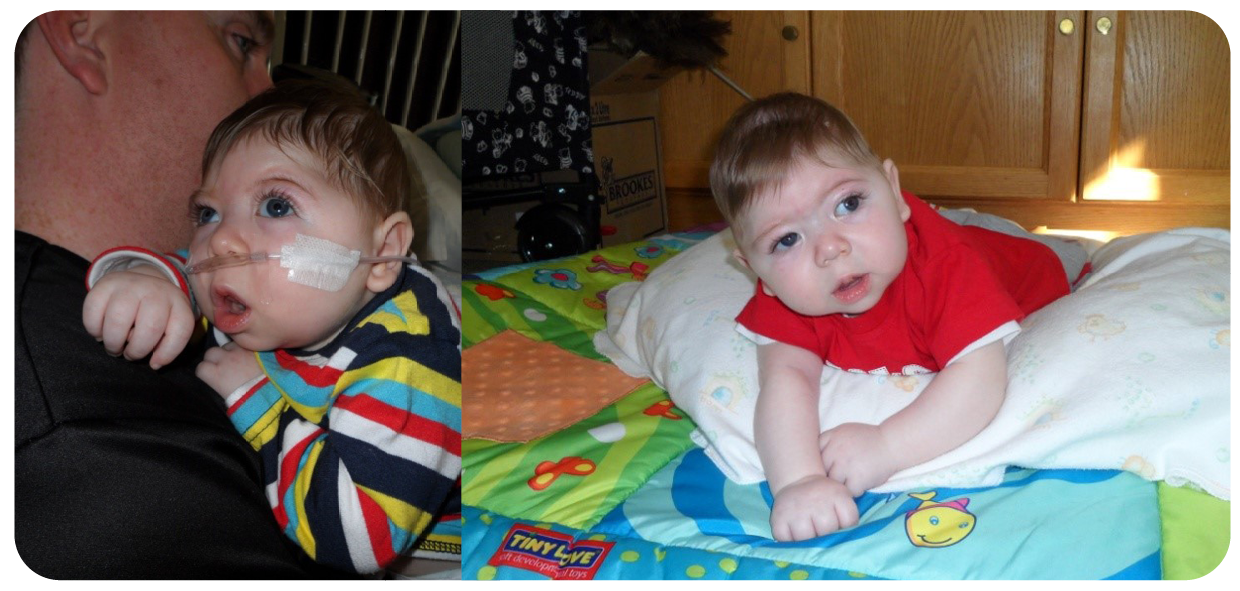
After a while, he managed to come off the ventilator and had his oesophagus repaired when he was 10 days old. He then struggled with weak lungs, an unfortunate complication of the fistula. Sadly, because of the prolonged period of acidosis, he sustained a major brain injury and is now showing signs of spastic cerebral palsy and optic nerve damage. Because of the brain injury, he is also unable to suck. He therefore had to undergo a further two operations to insert a gastrostomy tube into his stomach, enabling him to receive food directly into his stomach. He spent a total of 73 days in the PICU.
When he first came home from hospital, he became upset when touched and had a very strong gag reflex due to all the suctioning he had undergone in hospital. With repeated BabyGym massage and other positive experiences involving touch, I was able to begin helping him overcome his aversion to touch. In general, BabyGym massage has made him more aware of his body and where it is in space.
His thumbs were stiff, and he rarely unclenched his fists, even though he was nearly three months old. The neurophysiotherapist was concerned that his thumb would always remain tucked in, as it never straightened by itself. Using the BabyGym hand massage techniques, I helped him reach a point where his thumbs were no longer so tightly retracted. His hands began relaxing in general when he was about five months old. When he is calm, his thumbs now lie in a more normal position.
The stiffness in his muscles will always be a challenge because of the spastic cerebral palsy, but it was made worse by the stress of being in hospital. The BabyGym leg massage techniques have helped lessen the stiffness in his muscles. The BabyGym calf muscle massage has been particularly useful in calming him down, and the medical professionals have expressed surprise at the amount of movement he has in his legs.
He also tends to stiffen and arch his body, especially when he is upset. According to the neurophysiotherapist, this is partly a result of the cerebral palsy. By using the calming techniques suggested in BabyGym, I am able to calm him down quickly, which should help reduce the harmful effects on his muscles in the long term. I have found the BabyGym ear massage, the bear hug and tapping on the breastbone to be particularly effective in this regard.
The activities and exercises for rolling have also helped with his motor development. He has learned the correct leg position and, to some extent, how to position his arms (although he still needs help with this from time to time) to roll over from his stomach to his back independently. He started rolling by himself when he was six and a half months old. Once again, medical professionals have been surprised at how quickly he has been able to reach this milestone.
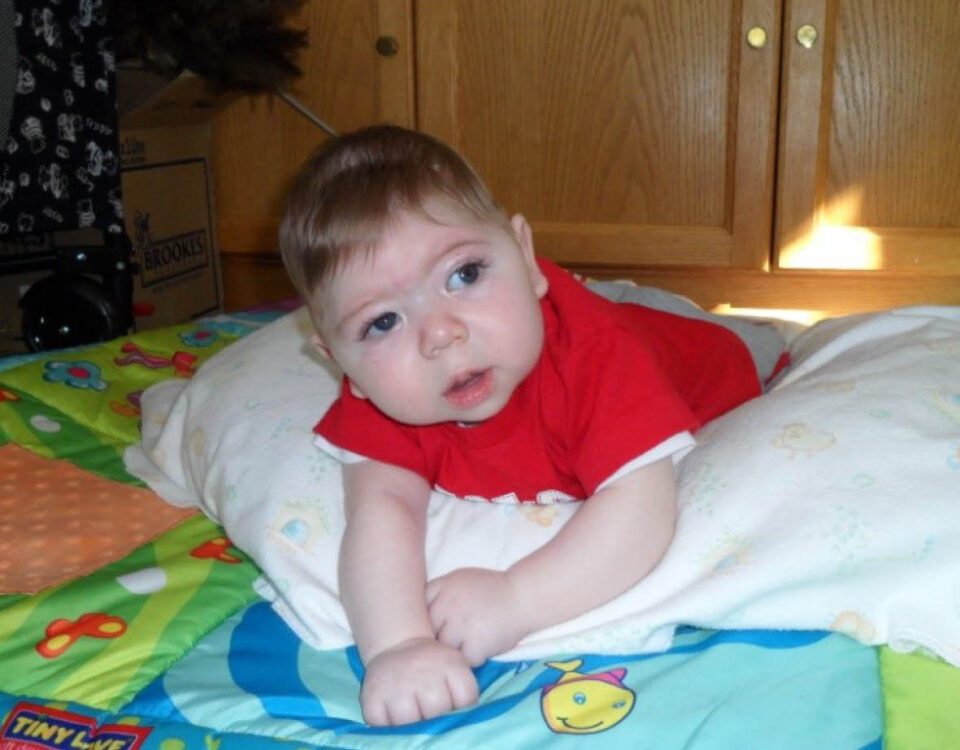
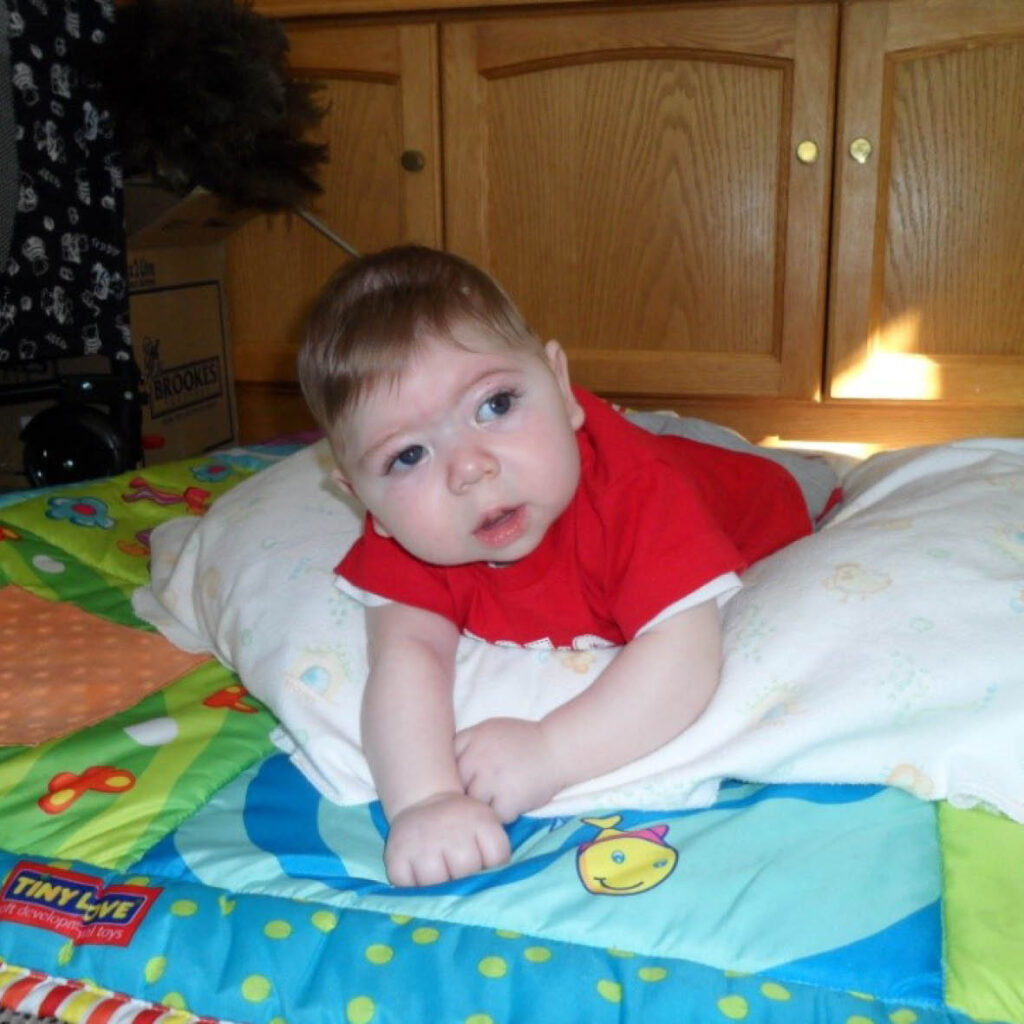
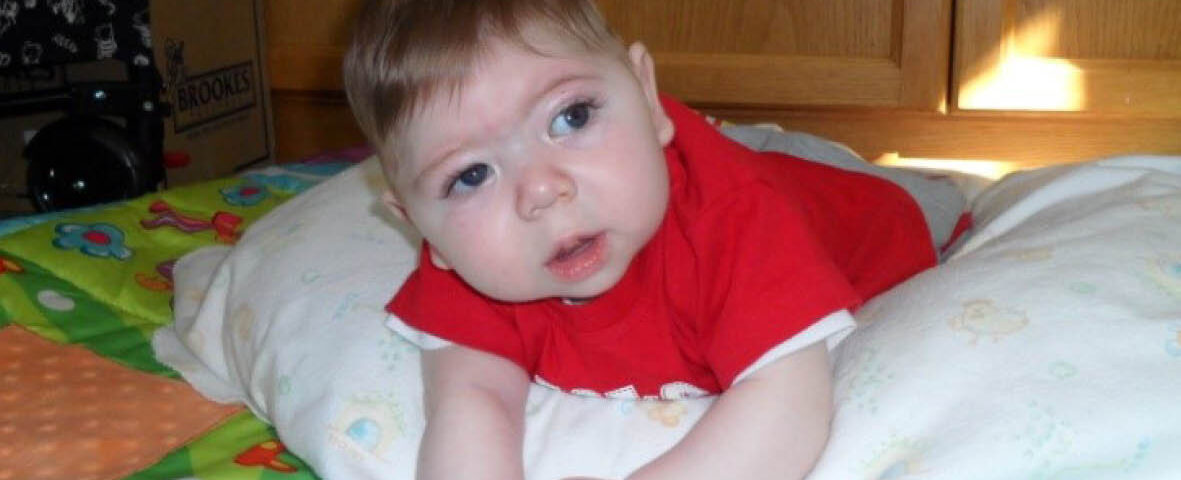
Giving him plenty of rug time and tummy time has definitely helped strengthen his neck and core muscles. He was able to hold his head up independently much sooner than expected, at the age of two and a half months, bringing him closer to the usual age for achieving this milestone. More tummy time is still needed, though, as he does not hold his head up for long periods and tires easily. His neck and core muscles therefore need further strengthening.
Since his initial 73 days in hospital, he has spent more than a month in hospital to date, on three separate occasions, because of inflamed airways caused by aspirating vomit into his lungs and a collapsed lung. All this additional time in hospital has been very stressful for him, and some of the progress he has made has been set back. I continue to work with him in hospital, as far as his condition allows. He still has good movement, despite being stressed and unable to have as much tummy time and exercise.
His improved sense of where his limbs are in relation to the space around him is clearly evident in his improved ability to remove his oxygen mask regularly, much to the nurses’ frustration!
Overall, it is clear that the techniques we have used have given Traynor a much greater opportunity to improve his motor skills, despite the significant delays caused by the cerebral palsy.