Dissipline en ontwikkeling stap hand aan hand
May 19, 2026
BabaGim en ’n seldsame vorm van Down se sindroom bekend as mosaïsisme
August 4, 2026Discipline and development go hand in hand


This article follows a radio interview between Carla Burg and Cozette Laubser on Pretoria FM. Cozette is a mother of two and the director of BabyGym Institute International.
How does one define discipline?
The word discipline originates from a Latin word meaning “to teach.” It therefore refers to the process of teaching a child a set of rules or boundaries and, in the process, shaping character.
It is every parent’s absolute privilege and responsibility to discipline their children, but in reality, this means something very different from merely punishing them. It is a process that, over many years, teaches the child what boundaries look like—boundaries that keep us physically, emotionally, and psychologically safe ~ Cozette Laubser
In early childhood, discipline is largely asking “What is safe?” and “What is unsafe?”
A child is not born with this set of rules, and it therefore has to be taught and transferred to them.
As the child matures, discipline later has more to do with what is socially acceptable behaviour and what is not. For example, one says “please” and “thank you” without exception.
For teenagers, this awareness of boundaries extends far beyond the family’s personal household rules. It includes, among other things, what is acceptable within a particular cultural group, and later within society, and what is not.
When is a child’s behaviour age- and developmentally appropriate, and when is the child simply naughty?
There is a very important distinction!
Here is an example: A three-year-old child is at the airport with their parents. The child has already been waiting very patiently at the terminal for a long time, but now it’s becoming simply too long, and the need to run around screaming takes over.
Is the child being naughty, or is the child simply expressing an age-appropriate physical need?
In this case, it is a completely normal, age-appropriate physical need. Yes, the behaviour may be disruptive to other passengers, and of course parents would need to channel this energy appropriately to keep the peace, but it remains an age- and developmentally appropriate need to move and play.
I recently read: “A child is first hungry, then tired, and then naughty,” and this is so true!
If you find your child’s behaviour impossible, it is always a good idea to first ask:
- What has my child had to eat?
- How much water has my child had to drink?
- Has my child had enough opportunity to run and play freely?
- How much screen time has my child had?
- Could my child be tired?
Does a child’s age and brain development stage determine the way one disciplines?
Yes, definitely!
In our work in early childhood development, we often refer to the Triune Brain theory. All three layers of the brain are present at birth, but they do not develop at the same time or at the same rate. Each layer of the Triune Brain has specific functions and characteristics that become the developmental priority at a certain age.
Children develop first physically, then emotionally and socially, and thereafter intellectually. Discipline is closely linked to the child’s age-appropriate developmental capacity and should reflect this.
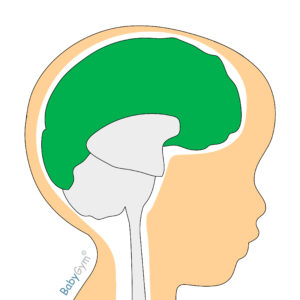
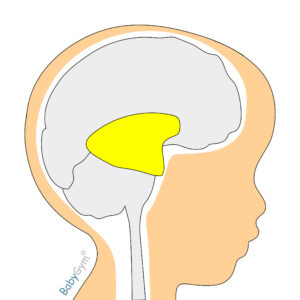
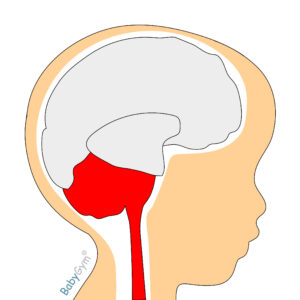
©Copyright BabyGym Institute International
There are three important developmental opportunities for the young child:
- The window of opportunity for physical development is from conception to 14 months.
- The window of opportunity for emotional and social development is from 14 months to 4 years.
- The window of opportunity for cognitive and language development is from 4 to 11 years
These are not the only times when these areas develop, but during these age periods, development happens relatively effortlessly and rapidly. Therefore, it is important to make the most of these sensitive windows of opportunity.
Applying this to the airport example: for a three-year-old child, who still has a strong need for physical, emotional, and social development, this type of behaviour is appropriate. For a 12-year-old, it is not appropriate, and the behaviour would be addressed quickly and firmly, with an expectation of a more appropriate response.
With a teenager, tricky matters can be discussed in depth. At this age, they should also fully understand that they must take responsibility for their actions and behaviour.
For example, a group of boys play cricket near parked cars. They know very well what damage a cricket ball can cause to a car’s bodywork. A ball hits a car, and the damage is done.
It may not have been intentional, and there may be immediate remorse, but the fact remains that they knew very well that one should not play near cars. The discussion then focuses on what plans can be made to pay for the damage.
How important are connection, communication, and consistency in effective discipline for children?
Those three words are the essence of discipline in a family. And when they are in place, the likelihood that one will actually need to punish a child is minimal.
Let me explain:
-
Connection:
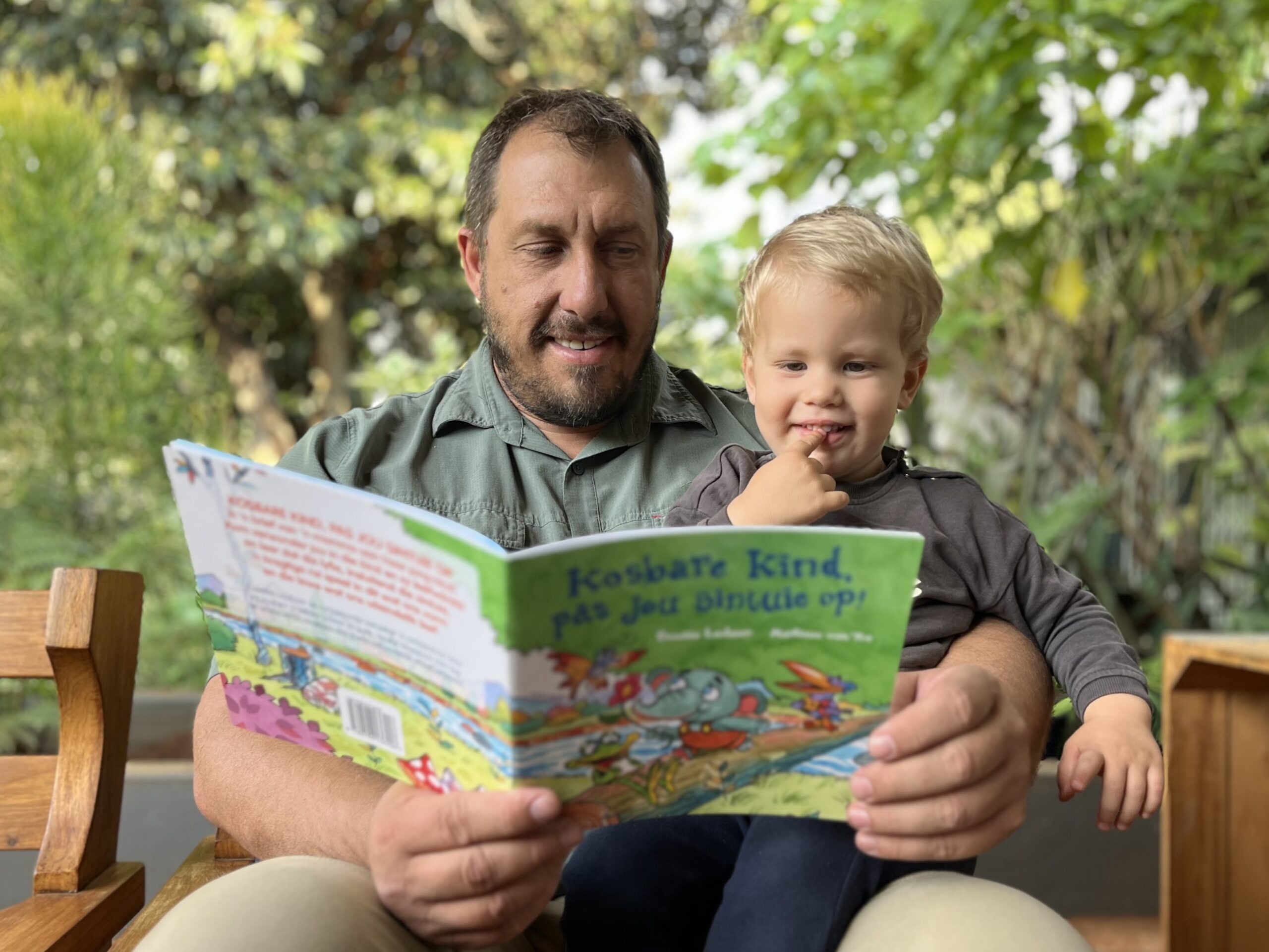
Safety and security are every human being’s primary need. When a parent and child genuinely love each other, have fun together, read good children’s storybooks together, and there’s mutual respect and appreciation, obedience follows more naturally—because the child experiences how enjoyable a positive relationship is.
The child then understands something fundamental: they learn to act with integrity, where the motivation to do the right thing comes from within.
-
Communication:
Communication is everything! Teach your child your family’s rules. Also, keep in mind that a child can only be held accountable to a rule once it has been clearly communicated.
For example, in our family we eat at a table. Fruit may sometimes be eaten in another room or on the patio, but food that requires a knife and fork is eaten at the dining table.
Why do we do this? Because it ensures valuable family conversation time and helps us truly eat together, rather than simply grabbing fast food on the run.
Once the rule has been communicated, everyone knows about it, and it is applied consistently.
-
Consistency:
Consistency follows communication so naturally: “Let your yes be yes and your no be no.” It is not open to interpretation and not negotiable. Parents also need to be united in this.
For example, in our home, children do not operate the intercom or open and close the access gate, whether parents are at home or not. The family’s safety and security are important, and this is not something we compromise on.
However, it is equally important to clearly communicate where children are allowed to help and where they can exercise their freedom and growing responsibility.
Where can children help Mom and Dad? This may include:
- feeding the dogs;
- setting the table;
- helping to prepare breakfast;
- saying the table prayer;
- and switching off the lights in the evening.
Does giving a child a hiding really help, and what are the long-term emotional and physical effects?
When one looks at extreme cases of corporal punishment—especially those bordering on abuse—there are very definitely physical and emotional scars that remain for life in those children, and later as adults.
Human beings are part of the mammalian species, and central to our existence is the need to feel safe and loved within our family. When we regularly and continuously experience anxiety, fear, and pain, it directly shapes our psyche and wires our brains in unusual and unhealthy ways.
Long-term implications include anxiety, depression, aggression, and even permanent mental health challenges. We so often see it in the news: the child who was treated incorrectly, unfortunately, often becomes the adult who later mistreats another innocent child.
Are there practical alternatives to giving a child a hiding?
There are always alternatives, but they are not quick fixes.
One very effective strategy is to teach your child from an early age to physically stop. This already begins in the first few months of a baby’s life, when little ones become mobile and try to put their exploring hands into all kinds of unsafe places—wall sockets, fans, heaters, or electric fencing on a farm.
Teaching your child which surfaces are safe and which are not is an extremely important first lesson in discipline.

Teach your child to stop using the following:
- Show: Hold your hand open like a STOP sign, with a clear verbal “Stop!”
- Tell: “This is dangerous. It can hurt your hand badly.”
- Move: Then you remove the child from the dangerous area.
From about 6 to 18 months, little ones absorb a huge number of rules. One really has to stay alert and repeat boundaries firmly and consistently. I am honest—it is an extremely exhausting phase! But please invest the time and effort here; it is absolutely worth it.
Between 18 months and 3 years, they mostly know the basic rules they encounter daily. They will often test boundaries—which is a good thing and actually a sign of intelligence. Be ready for it and hold the boundary, but with good communication and consistency, the foundation has already been laid. Hooray!
Soon, you also see how little ones begin to teach friends their rules (very seriously and with great conviction!) and even hold their parents accountable to the rules. Just look at 8-year-olds on the sports field—no one knows and applies the rules of the game better than a group of youngsters do!
When both parent and child develop the ability to press the STOP button, situations escalate far less often.
Remember that no parent, child, or family is perfect, and even with the best intentions, mistakes will happen—but with connection and communication, much can be resolved.
How can parents stay calm in challenging discipline situations?
That is the golden question. Even in the healthiest families, parents will sometimes reach boiling point.

I recently heard an expert say: “Don’t tell someone not to get angry; teach them how to be angry,” and I found that very meaningful.
Emotions arise in split seconds. One cannot always control how one feels internally about something, but one can definitely develop one’s own STOP button and choose how one acts externally.
In our family, we had to learn not to just storm into a room and immediately start reprimanding. Instead, during a conflict situation, we now ask: “What happened here?” And I must admit—the answers often make a surprising amount of sense.
By the time each child has shared their side of the story, there is often already a return to reasonable order. Or, in other situations, it becomes very clear that they simply need to go to bed and sleep.
If you could give one golden rule about discipline that every parent should keep in mind, what would it be?
Try to find a balance between connection and corrective discipline:
- If connection and nurturing come easily to you, discipline may not come as easily.
- If discipline comes easily to you, connection may not always come first.
This is of course a generalisation, but we all have strengths and we all have areas for growth.
An intentional parent will always see the fruit of their involvement in their child—and it is so worth it! Exhausting, yes, but absolutely worth it.